Icônes d’Albanie. Trésor du musée national d’Art médiéval de Korça.


French and Albanian translation and editing of the texts for the volume published by Silvana Editoriale
Chambéry, Musée des Beaux-Arts, 13 June–15 November 2026

From 13 June to 15 November 2026, the Musée des Beaux-Arts in Chambéry presents the exhibition Icônes d’Albanie. Trésors du Musée national d’art médiéval de Korça .
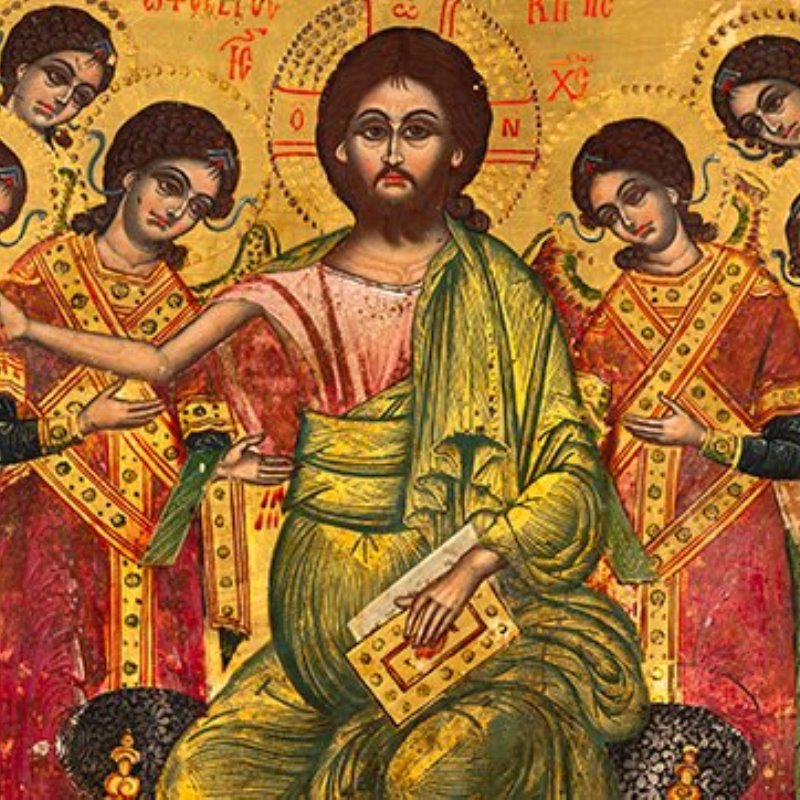
The exhibition brings together an exceptional selection of icons from the National Museum of Medieval Art in Korça, home to one of the most important collections of sacred art in the Balkans. Through works dating from the fourteenth to the nineteenth century, the exhibition explores the richness of Albania’s iconographic tradition and the dialogue between spirituality, history and Byzantine art.
With more than 6,000 icons, the National Museum of Medieval Art in Korça holds one of the world’s foremost collections of Byzantine and post-Byzantine art. The catalogue presents a selection of its masterpieces in the light of the latest research, at a time of growing interest in this heritage, reflected in the Louvre’s creation of a ninth department devoted to Byzantine art and the arts of Eastern Christianity.
From the fourteenth to the twentieth century, icon painting in Albania developed within the Byzantine tradition while gradually incorporating distinctive stylistic expressions and Western influences. The work of such emblematic artists as Onufri of Berat, the hieromonk Kostandin, Kostandin Shpataraku, the brothers Kostandin and Athanas Zografi of Korça, and later Vangjel Zengo and his daughters bears witness to the richness and diversity of Albanian icon painting, poised between the persistence of established iconographic conventions and the renewal of artistic forms.
The works that have come down to us survived the widespread destruction carried out in Albania between 1967 and 1990 in the name of state atheism. Photographs by Wandrille Potez document the present condition of the Orthodox churches that once housed the icons now held by the museum. The safeguarding, conservation, study and restoration of this heritage, undertaken both in the laboratory of the National Museum of Medieval Art in Korça and at the works’ original sites, are now matters of European-wide concern.